Pressure Is a Privilege: What NASCAR Can Teach Shop Owners About Leadership
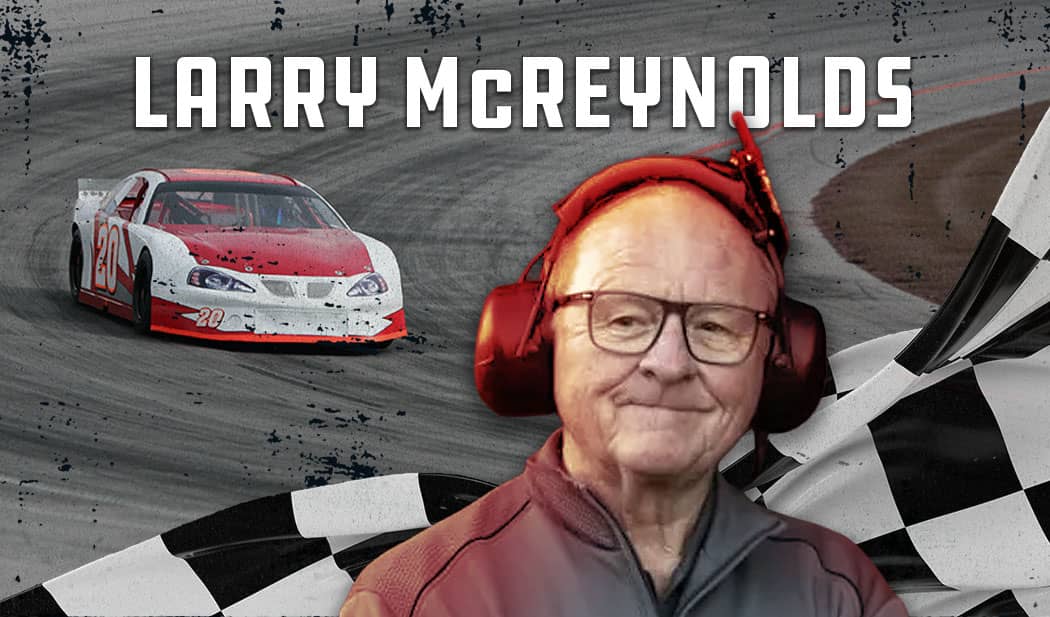
Quick Read: NASCAR legend Larry McReynolds has spent decades leading pit crews in high-pressure environments — and he’ll be sharing some of his wisdom at the upcoming Diesel Connect. In an interview, we talked about leading under pressure (and not letting it wreck your team), the importance of building systems that actually work, and turning mistakes into better processes, not bigger problems.
It’s not every day you get to interview a NASCAR legend.
But the folks behind Diesel Connect had booked Larry McReynolds, legendary pit chief and commentator, as a keynote speaker for the 2026 conference (psssst we still have tickets available), and with that booking came the opportunity to chat a bit with Larry. Obviously, we went for it, even though the amount of NASCAR knowledge the marketing team possesses can be contained within a single cup of coffee.
Larry’s love of racing started early: his aunt had a stock hobby car, and Larry helped his uncle work on that car in their basement. From there, he helped a local model racer, and in 1980 decided he wanted to pursue racing as a career. So he packed up his car in a U-Haul and moved to the Carolinas, hopefully to find work as a crew member. His parents told him he’d probably come back broke.
“You’re probably right,” he said, “but I’ve got to try it.”
His gambit worked: Larry ended up a pit crew chief for Davy Allison, Dale Earnhardt, and Dale Jarrett, among others. Along the way, he learned how to handle pressure, lead a team, and learn from mistakes — lessons every shop owner can recognize.
Pressure Comes With The Job
If you’ve never watched a NASCAR race before, here’s a little bit of a primer: cars go very fast, for a very long time, and it’s brutal on the vehicle. That’s where the pit crew comes in, servicing the car in seconds while the race is still on.
Seriously. They’re changing four tires and wheels and dumping about 19 gallons of fuel in 10 seconds at the most. And over the course of a 3.5- or 4-hour race, they get about 80 seconds in total to do their jobs. In other words, they go zoom. And they don’t get a lot of do-overs, either, Larry said. “If you make a mistake, you may not be able to overcome it.”
Oh man. That’s a lot of pressure.
“I’ve always said pressure is a privilege,” Larry mused during our call. “There’s a lot of people who would love to have experienced the pressure I did for 18 years.”
But what happens when the pressure ramps up? Mistakes. In truck repair, that can look like a missed step in an inspection. In a pit crew, mistakes stemming from pressure can mean the end of the race at best, or severe damage to the car and driver at worst.
Pit crews, Larry pointed out, only really get noticed when they screw up. Great: more pressure! As chief, he tried not to let that pressure trickle down to the team: “I always told the pit crew members … [to] make sure you’re the best that you can be, and that will probably be sufficient.”
Focus On The System
When things go wrong, we look for a reason. It’s human nature, and it doesn’t matter whether the problem happens at work, during a NASCAR race, or while you’re playing video games. That inner voice wants to know, Why did this happen? How can we prevent it from happening again?
When things went wrong in the pit, Larry’s philosophy was not to immediately assign blame to a person, but rather to figure out what the pit crew could do as a team to prevent it from happening again. Because a bad pit stop isn’t always about the pit stop crew as people; sometimes it’s a botched process.
(If you run a shop, that might sound sadly familiar.)
“If we just replace the individual that made the mistake … we can [do that],” he said. “But if our system’s weak, or we’ve got a bad procedure in place, the same things are probably going to happen again.”
Learning From The Losses
Anyone can tell you that winning races is awesome. The thrill of victory! The accolades and pats on the back! THE TROPHIES!
But there are as many ways to win as there are to lose. Sometimes,you do learn a lot more from taking the L (as the kids are saying). Sometimes you just have to try something new — a procedure, a new type of wrench, or extra-strong coffee — to see how things shake out. It may work. It may not work. The fun — and the lessons — are in the finding out.
“It’d be nice to know that everything I did was a positive change,” Larry said. “If that was the case, I’d have probably doubled or tripled the number of wins. But learning what not to do can be as much of a positive learning experience as things … that work.”
Teamwork Is Everything
“If you look at the definition of a team, it’s two or more people trying to accomplish a common goal,” Larry said. “People really lose the concept of how much of a team sport NASCAR is.”
So, let us pose his question to you: Who won the Super Bowl in 2025?
The answer, of course, is the Philadelphia Eagles.
OK, then who won the World Series in 2025?
The Dodgers.
Who won the Cup Series Championship last year?
That would be Kyle Larson.
That’s where Larry likes to push back a little: “I’ll go, OK, let me get this straight. Kyle Larson drove the car. Kyle Larson built the cars. Kyle Larson built the engines. And oh, by the way, when he came to pit road, he unbuckled and jumped out and changed the tires and wheels and got back in.”
Larry’s comment here is not to take away from racecar drivers, who are exceptionally talented and operate in very, very dangerous environments. But it does drive home how much of a team sport NASCAR really is. They’re racing from February until November, and even during the winter downtime, the pit crew is still in the shop, redoing and rebuilding 3,500-pound racecars that need to be ready to go when racing picks up again.
Want To See Larry In Person?
Larry’s NASCAR wisdom isn’t just useful for racecar pit crews. A lot of it transfers over to the heavy-duty repair world, which is also filled with pressure and requires functioning systems and a real sense of teamwork. That’s why we invited him to Diesel Connect 2026: what he has to say will resonate with shop owners.
Larry’s keynote is sure to be a highlight. DC26 will, as usual, feature a wealth of other presentations and workshops that will benefit heavy-duty professionals. In one session, Hector Flores of Knight-Swift Transportation will join Jack Legler, Technical Director of ATA’s Technology & Maintenance Council, for a deep dive into how fleets work with service providers to develop industry recommended practices. We’ll also have seminars around finance and marketing, as well as deep dives into making Fullbay work even better for you.
(And yes, the food is going to be amazing again. That’s why I’m going, anyway.)
We’ve still got a handful of tickets left to DC26, and we’d love to see you there. Secure your tickets now and we’ll see you at the finish line in Arizona!


Get news & tips right in your inbox.