It’s Not You vs. Them: Collaboration and Leadership with Stacy Conner (A Diesel Stories Recap)
Summary: In this episode of Diesel Stories, shop owner Stacy Conner shares lessons on leadership and adaptability in the heavy-duty repair industry. From dealing with generational shifts to working with AI, her approach centers on openness and collaboration. You’ll learn how leadership’s behavior sets the tone for the entire shop. We also cover why the best teams combine old-school experience with new-school tech skills, and how building a strong network can unlock opportunities (and better serve customers).
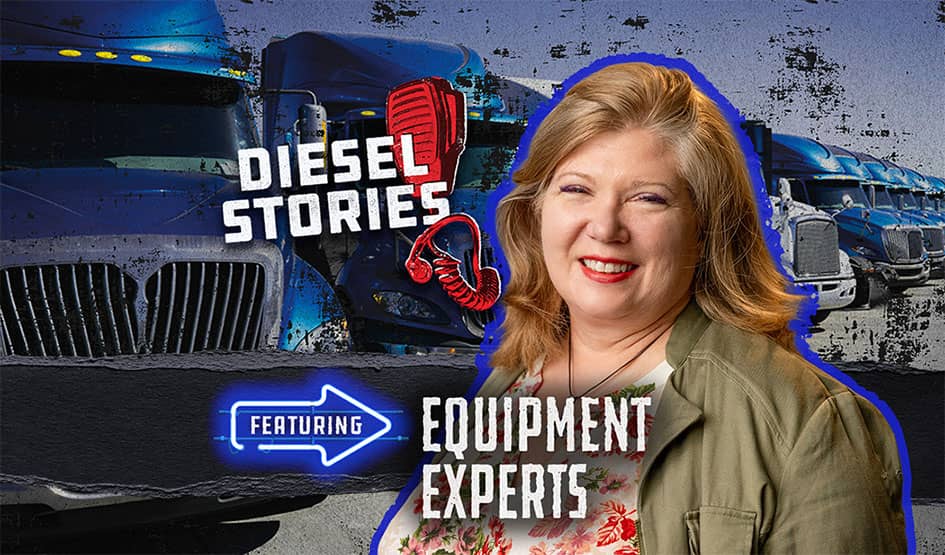
Hello again, Fullbay friends and family! We’re back with another Diesel Stories recap. This time, host Peter Cooper sat down virtually with Stacy Conner, co-founder of Equipment Experts, Inc. in Washington.
Stacy has a lot of wisdom to share about the industry, having co-founded Equipment Experts with her husband in their driveway over 20 years ago. Today, they have 35 employees and have been recognized as one of Seattle’s best places to work. She and Peter chatted for almost an hour, covering several topics that will be of interest to shop owners.
You should definitely watch the whole thing when you can, but if you’re pressed for time, read on for the highlights!
Leadership Sets The Culture
Your shop’s culture is, more often than not, a direct reflection of your leadership.
Stacy knows a lot about how important shop culture is to both hiring and retention — she even brought her expertise to a webinar about that very topic. As she and Peter talked, she made it clear that culture is driven by top-down forces.
“[As leaders] you’re setting a model and behavior: what’s acceptable, what’s not … the values, and all of that,” she said. For example, if shop leadership avoids accountability, withholds information from employees and customers, or operates out of fear, that behavior spreads fast.
You want an open shop, though.
Shop leaders should model the traits they find acceptable. In Stacy’s case, that’s transparency and openness, and practicing those traits have helped her create a shop where people feel comfortable speaking up and sharing ideas. They even bring in new opportunities: just days before the podcast, one of Stacy’s technicians did exactly that — pulled in new work for the shop.
Work With Younger Techs, Not Against Them
Much has been said about the difficulties the industry has faced in attracting new talent. Young people aren’t into the trades, the story goes. They especially aren’t into diesel, which is perceived as dirty, backbreaking work that doesn’t pay well. The younger people who do head into the field are often regarded with a sort of suspicion: Who are these weird kids with their technology?
That sentiment has spread to the shop floor, too, and it’ll wreck your vibe if you don’t get ahead of it. “A lot of times what I see is older mechanics [and] older shops — they don’t like the younger mechanics,” Stacy said. “They think … the younger generation [doesn’t] work like we did.”
But that mindset can and will hold a shop back.
“Give me somebody that’s 28 years old, can spin an iPad on their finger, look up some stuff, and figure out a solution,” Stacy said. Younger techs can bring speed and adaptability, along with comfort with technology. That skill in particular is becoming more important by the day — just look at the inroads AI is making in the industry.
A lot of good things can happen when you combine that techno-know-how with old-school mechanical knowledge. Shops that embrace both sides (and create an environment where they can learn from each other) set themselves up for stronger teams and better outcomes. But it only works if leadership is open to it.
The Times They Are A-Changin’
The discussion about the younger generation led Peter to an interesting question: “How do you approach change?”
From new technology to shifting workforce expectations, shop owners are constantly being asked to adapt. Stacy runs her business with the knowledge that something is always going to change. By understanding that it’s unavoidable, and making it predictable, it becomes less of an emotional roller coaster.
And when you recognize that problems and disruptions are inevitable, you’re less likely to overreact or make knee-jerk decisions when they show up. Instead, when change happens, Stacy asks, “How do I adjust? Where is the opportunity? Where’s the opportunity gonna land in one year?”
She offered the example of AI, which she expects to drive major changes in the next few years. After connecting with an AI specialist at an industry event, she built a small network and studied how AI is being used in blue-collar fields. Then she started applying those insights to her own shop.
The result: multiple AI implementations already in place to reduce repetitive tasks and save money in the long run.
“The more you resist something, the more you’re gonna fight it,” she remarked. “Once you take that effort and that emotion out of it, it becomes a new subject to learn.”
Your Competition Is Not Your Enemy
All too often, one shop owner sees another as competition and nothing else.
Yes, they are (sometimes) competition. But they’re also your peers, and you can all learn a lot from each other. You can even refer customers to each other — if you’re jammed up and can’t handle a brake job, pass it on to the shop down the street. If they’ve got a turbo rebuild they can’t handle, they’ll toss it to you. And so on and so forth.
“If you create a whole network, you take care of your customers, and they’re gonna be happy,” Stacy said. She added that she networks with most of the shops in her area. “There’s plenty of work,” she said. “If I lose a customer because I didn’t take care of them, that is not [another shop’s] fault.”
What do you need to do to benefit from those connections? Check your ego at the door. Shop owners have got to stop seeing their peers as competition and instead view them as friends and potential resources; those who can do so will gain a lot of valuable insight from each other.
As Stacy describes it, the conversation usually starts with something simple: dropping the competitive guard and having a conversation. “[I ask] Have you run into this? Did you hear what’s going on?” That kind of open back-and-forth builds trust fast.
Hmm, there’s that word again: open.
When you’re approachable and willing to share, “the walls come tumbling down,” and suddenly you’ve got a network of people trading real-world solutions instead of guarding their imaginary secret sauce.
“It’s not us versus them,” Peter agreed. “It’s us versus the world.”
There’s Lots More To Listen To
Stacy and Peter touched on plenty of other topics. The conversation also included:
- What the real secret sauce to shop ownership is (hint: it is not how you fix trucks).
- How the Equipment Experts team deploys pre-planned marketing blitzes during slow periods (usually March and August).
- The importance of incorporating data into planning.
- How the way Stacy thinks about the business has changed over the years.
…and much more.
We hope you’ll watch the episode (it’s on YouTube!) — and hey, if their conversation inspires you to do some networking, why not join us at Diesel Connect? Peter and Stacy will both be there. Odds are you’ll make new friends and learn a lot!


Get news & tips right in your inbox.