
Tight Margins, Tighter Processes: How Fullbay Helps Shops in a Challenging Economy
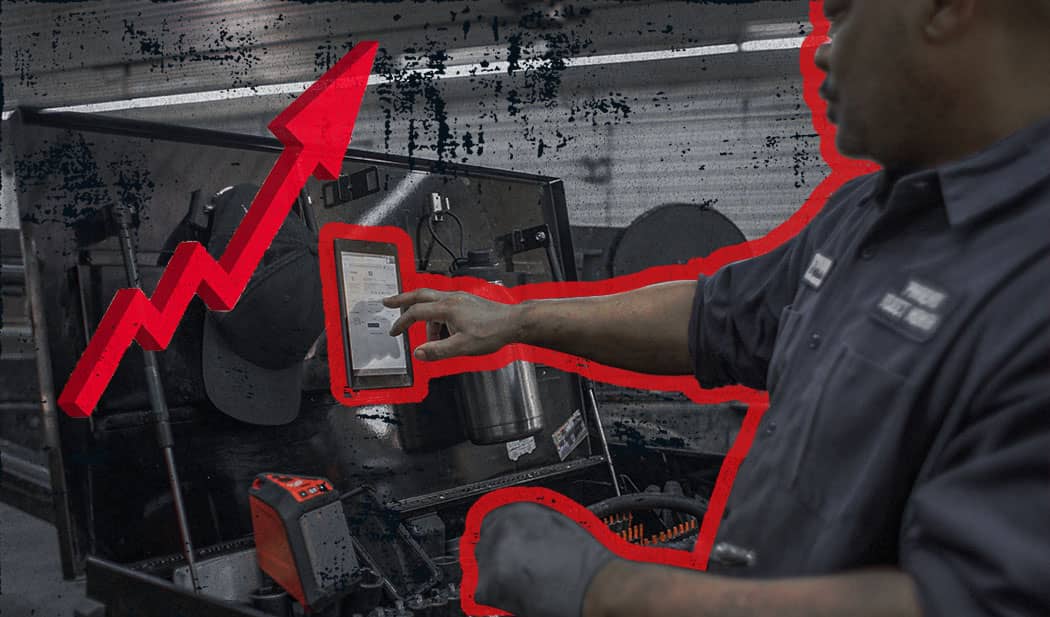
There’s no question that the trucking economy is tough right now. The freight recession has dragged on since 2022; that, on top of tariffs and inflation, has made life harder for repair shops across the country.
“The economy is a bit of a [bleep] right now,” according to one shop owner we spoke with recently.
But it’s not all doom and gloom; just a few years ago (remember COVID?), we saw how shops can not just survive this sort of turbulence, but grow and succeed in it. Fullbay is the largest, most trusted name in heavy-duty repair, with more than 5,000 shops on the platform. That means we have a unique vantage point on what’s working in shops and what isn’t.
While we see shops getting pinched, we also interact with shops that are doing well. Like, really well. Take Bill Kerry of Kerry Brothers Truck Repair in Detroit, Michigan. They closed out 2023 with 23 employees; as of this month, they have 100. Business is booming.
So success and growth are definitely possible, even in this economy. But what are these successful shops doing that others are not?
They use Fullbay.
That’s it, that’s the article.
For real, though: In the last year alone, shops powered by Fullbay processed more than $6 billion in transactions. Our platform is built specifically for heavy-duty operations, taking over the paperwork, tracking, and other operational chaos so shops can focus on turning wrenches and turning a profit.
But let’s be honest. The economy feels unpredictable, and committing to new software isn’t an easy decision. Even if it can help, it’s natural to question whether now is the right time. Just hear us out: most shops aren’t struggling because they can’t fix trucks. They’re struggling because the operational side of the business is carrying more weight than it should. Most of these operational issues have been present for a long, long time — shop owners are just now getting hit by them because the economy switched to decaf.
The Economy Didn’t Create These Problems
Shops aren’t suddenly losing money because of the economy.
It’s a bold claim, right? But it’s true in many cases, and honestly, even the struggling shop owners we talk to still have plenty of work. Sometimes they have more work than they can handle! So it’s not a matter of customers no longer getting their vehicles repaired.
“We’re seeing more chargebacks now than we ever used to,” one shop owner told us.
“If I miss something on a ticket, that’s money I don’t get back,” said another. “I can’t afford to lose a $5,000 job because something wasn’t documented right.”
What are the culprits in those scenarios? Spoiler alert: It’s usually not shoddy workmanship. Instead, it’s customers who are also feeling squeezed attempting to tighten their own belts, which leads to the following:
- Customers start scrutinizing invoices. They start questioning labor hours, parts pricing, shop supplies…stuff that used to not bother them. This can quickly lead to documentation disputes.
- Customers start pushing back on estimates. Does the question, “Do I really need that now?” sound too familiar? Some shops have received requests to prioritize only what’s absolutely necessary.
- Stretched service intervals. You know it’s getting tight when PM work gets delayed. You might also be getting requests to “just fix what’s broken” and deal with the rest later.
- Increased sensitivity around parts pricing. “Hey, I can get this for half the price on Amazon,” they may say. Customers are more aware of markups, and you as a result are looking nervously at your parts room.
- Slower payment cycles. Customers that used to pay up ASAP may be holding on to cash longer.
If even just a few of those look uncomfortably familiar, then you know what ends up happening next. Suddenly there’s less revenue coming in while overall prices continue to increase. That’s a recipe for disaster if we ever heard one.
So. What can you do to fix these problems, and how can Fullbay help? We’re so glad you asked, and we can tell you where to start: with the workflow.
Fix Your Workflow First
When money is tight, it becomes more important than ever to know what’s been done, what’s been billed, and what hasn’t. This is basically Fullbay’s bread and butter. It’s what we built the original app around — we saw the problems that shops were having with documentation and getting things done in an orderly fashion, and realized a digital, step-by-step process could solve a lot of headaches.
Be warned: the workflow may seem like a lot of steps, but it’s really not. Once you start on a job, Fullbay helps you move through each action item quickly. The entire process ensures that you’re not leaving money on the table — while protecting yourself against disputes.
Here’s what Fullbay’s Service Order Workflow looks like in practice:
- A job is assigned to a technician.
- The technician diagnoses the problem.
- The technician adds the parts they’ll need to the Service Order, along with a time estimate. Fullbay makes this easy by providing access to industry-leading Labor Time and Service Guides from Mitchell 1 and MOTOR, by the way.
- The customer authorizes the repair.
- If necessary parts aren’t in stock, they’re ordered.
- Ordered parts arrive.
- The repair proceeds and is completed and documented. If Fullbay’s AI features are enabled, a tech can even talk his way through repair notes instead of pausing to write down each step; the AI will convert them into clean, easy-to-read notes (bonus! The AI can translate notes from Spanish, Russian, and other languages into English!).
- The customer is invoiced.
You can learn more about the overall workflow and see a more detailed breakdown of it here.
The workflow isn’t just about making sure repairs take place in an orderly fashion. Thanks to the authorization step and the detailed documentation it collects, Fullbay’s Service Orders and invoices help protect your shop in the case of a chargeback. (And if you’re using Fullbay Payments, you get the support of our team through the entire chargeback process.)
How Fullbay Improves Efficiency
Most shop owners are no strangers to buckling down. They put on whatever hats are necessary: “I’m doing everything myself,” an owner told a sales rep. “Working, billing, answering the phone.” Which, as you might imagine, often leads to more time managing paperwork than turning wrenches. But what if you could help your existing techs (and yourself!) be more efficient? What if they could get more done in less time?
Again, Fullbay is pretty darn good at efficiency. You could say we built the platform around it. The digital workflow we talked about earlier — the same one that protects you against legal challenges and chargebacks — is built around helping your techs do their best work in the least amount of time.
Every step of the estimate, repair, and invoice process is logged in Fullbay. Anyone who needs to see what’s going on can pull up a unit and see where it is in the process, what it’s waiting on, and who’s working on it. Powerful reporting features let you see everything that’s going on under the hood, from how much your techs are working to what parts are moving and what invoices are still outstanding. Heck, you can see some (but not all) of our most useful reports right here.
An anonymized view of Fullbay shop data tells us that shops powered by Fullbay see an average increase of 23% in technician efficiency six months post-setup, by the way. That’s 23% more work getting done in the same amount of time.
The Right Tools Pay For Themselves
“I don’t need bells and whistles,” a shop owner said. “I need fewer headaches.”
While we can’t ship them a bottle of ibuprofen, we can point out that the right software is a valuable tool for a shop. And it’s not really a cost, either; it’s a protective investment.
Shop owners want to save time and prevent costly mistakes. And that’s where the value of Fullbay really becomes visible. More efficient technicians and a documented workflow are going to solve a lot of your problems, but that’s definitely not all Fullbay does. You can also trust it with:
- Clear and detailed notes for customers, thanks to powerful AI features (want to see how Fullbay AI has helped a real-life repair shop? Check in with New England Fleet Services!).
- Scheduling jobs.
- Inventory management.
- Integrations with software you’re already using, like QuickBooksⓇ.
- Managing customer communication.
- The aforementioned reports, which will tell you everything you need to know about your shop and probably a few things you never even thought about.
And a lot more. We’d even go so far as to say when used properly, Fullbay pretty much pays for itself.
Seriously, it does. Here are actual average numerical improvements we’ve seen from our own customers:
- On average, shops see a 20% increase in labor-driven revenue after six months of being fully onboarded. After 12 months, shops can expect to see a 22% increase.
- The average shop starts seeing a 36% increase in invoices being created per week just three months post-onboarding; it rises to 63% after six months.
- The average shop sees a revenue increase of $20K/month within the first three months after onboarding; within six months, that revenue increase goes up to an additional $48K/month.
Again, those are numbers we’ve pulled from Fullbay data. Actual, real-life shops pull in thousands of additional revenue per month after three months. That would make any economic downturn a little easier to weather.
You Need Every Advantage in this Economy
In times like these, the last thing a lot of shop owners are thinking about is growth. Growth would be swell, of course. But a lot of folks are more concerned about paying their bills and keeping their heads above water. When the economy is unstable, all the stuff you used to be able to get away with becomes highly, painfully visible. By repairing those problems in your shop, you’re suddenly on a level playing ground again.
Fullbay can help you do that. Remember the Kerry Brothers? They’ve more than tripled their workforce since 2023. They started using Fullbay in 2023. Coincidence? WE THINK NOT.
(We’re kind of joking…but what if we aren’t?)
Treat Fullbay, or any other shop repair platform you look at, as an investment in your shop. It’s not going to solve all your problems overnight, but let’s be real — most “silver bullet” fixes aren’t fixes at all. What Fullbay does is bring order to the chaos of a heavy-duty shop, and from that chaos comes happier customers and more revenue.
Seriously. What would you do with an additional $48,000 in revenue a month? Think about that next time you tell yourself, “I’m holding off on any new tools until the economy stabilizes.”
Frankly, we don’t know how long that will take.
Why not start economy-proofing things today? Give your shop the extra nudge it needs to get through the tougher times. Book a (free) demo and see exactly how Fullbay can help you step on the gas.


Get news & tips right in your inbox.
