
Chrome Doesn’t Get You Home: How One Mobile Repair Owner Built a Profitable Repair Business

Summary
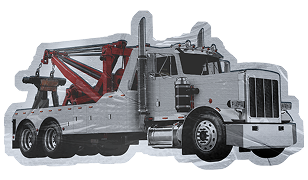
Running a one-man mobile repair business takes more than technical skill. In this Diesel Stories recap, Jordan Steen shares how he built Six Gun Diesel Repair, as well as how he protects his time, manages cash flow, and earns more by delivering greater value (instead of just working longer hours).
- Learn why starting lean, tracking costs, and staying on top of billing matters.
- See how clear boundaries and value-based pricing can support a healthier, more sustainable business.
Repair shop owners wear a lot of hats.
This is especially true for the one-man mobile repair operations that dot the country. They’re office manager, mobile tech, parts guru, and often negotiator wrapped all in one. And that’s before they get into the accounting side with taxes, insurance, and the like.
On a recent episode of Diesel Stories, Peter Cooper of Ascend Consulting sat down for a virtual chat with Jordan Steen of Six Gun Diesel Performance and Repair to discuss about how Jordan started his operation, what numbers he watches, how he sets boundaries with customers, and more.
You should, of course, watch the entire episode at your leisure. But if you’ve only got a few minutes and want to learn some cool stuff, here are four takeaways from Jordan’s episode.
Start Lean And Know Your Numbers
Jordan spent most of his dealership career as a field technician, working directly with customers and largely managing his own schedule. Over time, though, he became frustrated by the inefficiencies between the field and the office — and realized many customers were loyal to individual techs as much as to the dealership.
He did not make the leap overnight. As he moved between dealerships, he maintained relationships with former customers, telling them, “If you have things you want me to work on after hours, I’d be happy to come help you.”
He started moonlighting, and put together his own service truck in the interim.
Now, the service truck is the mobile tech’s partner — and office, toolbox, and livelihood. Ultimately, it can make or break your business. If it’s not working, you aren’t going anywhere. If it’s working but constantly needs repairs, you’re going to be forking out a lot of cash.
A shiny new service truck can make a tech feel good (and it looks great sitting in the driveway, too)…but it doesn’t automatically make a mobile operation more profitable. Far from it, in fact; making payments on a $250,000 vehicle while trying to get your small business off the ground is going to hurt more than it helps.
“Chrome doesn’t get you home,” Jordan said. “It might look really nice, but it isn’t gonna pay any more bills than the … 2000 F-750.”
Any mobile business comes with a lot of variable expenses — fuel, travel time, maintenance, and opportunity cost all factor into them. A truck that burns 40 gallons of fuel in a day needs to generate enough revenue to cover more than labor alone. Tack on a hefty monthly payment to those prices and suddenly you’re looking at a huge investment.
Jordan wanted to avoid that. He did put work into the truck when he got it, overhauling the engine and plopping in a new transmission. But the truck was paid off and in good condition the moment he officially set out on his own, and he managed to eliminate major repair costs during his first year, too.
Setting Boundaries With Customers
We definitely wanted to touch on this topic, because we all need boundaries, and shop owners (and business owners in general) are notoriously bad about maintaining them. Hey, it’s understandable: your business is your career. If you have a boundary, your customer might leave you.
“I make my family a priority because the little amount of time that I do get to have with them, I want them to know that I will give them my time and energy,” Jordan explained. He has designated days that are dedicated to his family, and he is upfront with customers that he won’t be able to get to them on those days.
Those words probably sound terrifying, but that boundary, Jordan said, hasn’t hurt him. “Nobody’s walked away and said they’re not willing to work with me anymore because of it,” he said. Customers appreciate that he’s upfront, and many seem to admire the line he’s drawn.
It’s important to look at it from a financial standpoint, too. If a customer isn’t going to respect the lines drawn around your family — or, say, fulfill the requirements you have as a human being that needs to eat and sleep regularly — what other boundaries are they going to push or outright disregard?
This is, understandably, a particularly tough question for owners who have very few customers (or one huge customer who eats up 90% of their time and provides 90% of their income). Those customers, unfortunately, can be hard to say “No” to because if they leave, well, they leave and you’re up the creek.
But that’s also why you should diversify.
Dealing With Non-paying Customers
As you may have gathered from the section above, cash flow really matters to the one-man band. Mobile heavy equipment repair is expensive no matter how you slice it, as fuel, truck costs, and expensive parts can pile up quickly.
“You can go out there and fix all the machines you want, but until you send that bill, you didn’t do anything,” Peter remarked. Sure, the customer is happy, but you didn’t make any money.
Jordan closely tracks billed hours, money received, work in progress, and outstanding invoices. He takes detailed field notes to ensure that his travel, labor, equipment, and customer information make it onto the invoice. “I use Fullbay for all of my billing,” he said, crediting the software with keeping him organized.
“I give [customers] the benefit of the doubt on the first bill,” he said. “It says right on the bottom of the bill that it’s due within 20 business days from the date of billing.” He also includes a separate piece of paper laying out his payment terms more specifically: Customers have 20 business days or 30 days in total to pay up.
If they don’t, he puts an additional 20% on the bill.
If they don’t pay it within 60 days, he warned, “I’m gonna go repossess the repairs on the machine.”
He acknowledged he hasn’t actually had to do that yet, though there have been some instances where he’s needed to decide whether pursuing action is the correct course when it wasn’t worth his time to go after the money.
“Fifteen hundred bucks is hard to justify [trying to] get back from a customer when I couldn’t basically bill that for another day of working for someone else,” he remarked. If he decides pursuing payment is no longer worth his time and energy, he blocks that customer’s number and just moves on.
Of course, protecting revenue isn’t only about collecting what customers owe; it also means charging enough in the first place.
Making More Without Pouring In More Hours
Jordan doesn’t try to increase revenue by jamming more hours into the week. Instead, he keeps an eye on local dealership labor rates, listens to what customers are paying elsewhere, and sets his own prices around the value he provides. “If you want cheap, I’m not the guy,” he said, pointing out that undercharging would force him to work more hours to earn the same income. “It goes back to providing value to your customers. I believe they’re willing to pay for the right mechanic to be on-site no matter what that dollar amount is.”
(Readers, this is your sign to charge what you’re worth.)
He also increases the value of each billed hour by continually expanding his diagnostic and repair knowledge. Jordan talks with other mechanics, learns from the problems they encounter, and looks for safe temporary solutions for situations where, say, the correct parts aren’t immediately available. He related one story where he discovered a cab temperature sensor on a Cat 926M could temporarily replace a failed coolant temperature sensor, allowing the machine to complete a regen and return to work until the proper part arrived.
Boom! Customer downtime avoided.
Watch The Entire Episode Now
Jordan and Peter covered several other topics, including:
- Whether it was scary to head out on his own.
- What expanding the business might look like.
- The lack of knowledge sharing in the industry (and what Jordan’s trying to do about it).
- What college was actually good for.
Jordan’s approach won’t work for every mobile repair operation. But the larger lessons he’s learned will apply almost everywhere:
- Start with as little debt as possible.
- Know what it costs to keep the business running.
- Charge for the value you provide.
- Stay on top of billing.
- Set boundaries before the job consumes every available hour.
After all, the point of going out on your own isn’t just to create another job. It’s to build a business that supports the life you actually want.
Watch the entire episode here, and we’ll catch you next time!


Get news & tips right in your inbox.
