Building Accurate Quotes: What Every Heavy-Duty Shop Should Include
Inaccurate repair estimates cost heavy-duty shops more than money — they erode customer trust and slow down the entire workflow. This guide breaks down what every estimate template should include (job details, labor rates, parts pricing, and terms and conditions), highlights the most common mistakes shops make, and explains how the right software can take the guesswork out of quote creation for good.
Inaccurate quotes are an epidemic in today’s world. Just ask any middle-school band kid who’s tried to recite a Monty Python sketch. Flub the punchline and you never hear the end of it.
If your shop’s quotes are regularly coming in off-target, you’re probably already feeling the ripple effects: customers pushing back on invoices, techs losing time to paperwork chaos, and revenue quietly slipping through the cracks. The good news? Getting your repair estimates, right isn’t complicated — it mostly comes down to knowing what to include and having the right system in place.
This guide will walk you through exactly that.
Templated vs. Manual Estimates: What Works Best?
Not sure which type of estimate is best for your heavy-duty repair shop? Here’s what you need to know about:
Manual Estimates
For ages, manual estimates were the tried-and-true way to create heavy-duty shop quotes…but while they’re still “tried,” to say they’re “true” might be a stretch. If you rely on your techs to create their own estimates without assistance, you’ll have to worry about inconsistencies, missed fields, and other forms of human error.
Templates
Fortunately, there’s no need to start from scratch while building estimates for your shop. If you set up a preformatted template for your techs to fill out, they can create quotes faster while making fewer mistakes along the way. Having this structure in place will also ensure consistency between jobs and help your employees communicate with customers.
The bottom line: if your shop is still doing estimates by hand without a template, that’s the first thing to fix.
Why Accurate Repair Estimates Matter in Heavy-Duty Shops
When your shop’s repair estimates aren’t as accurate as they could be, you might run into:
- Lost profits. Your estimates determine how much customers will pay when their work is done. If these documents don’t line up with the services your techs actually provide, you might not be getting the payments you deserve.
- Disputes with customers. Naturally, customers expect your estimates to be as reliable as possible. When they have to deal with inaccurate estimates on a regular basis…well, let’s just say they won’t be overjoyed.
- Approval delays. If your estimates are particularly confusing, your clients could spend longer than usual reviewing them. That, in turn, will prevent you from starting on their repair ASAP.
- Efficiency problems. The time workers spend building estimates without a template and dealing with unhappy customers will interfere with your shop’s workflow—bringing your overall efficiency down in the process.
Key Elements Every Repair Shop Estimate Template Should Include
The template your techs use while creating a repair shop estimate should come with:
Repair Job Details and Estimate Numbers
You don’t need us to tell you that repair shops want to have as much business as possible. But when you get that much business, you’ll also have a lot of paperwork…and if you aren’t careful, you could find it almost impossible to tie each quote to its respective job.
To make things as simple as possible, include any relevant details you can think of in each diesel repair estimate you create. You’ll also want to give each job a unique tracking number—that’ll make it much easier to avoid confusion while looking at a repair estimate form later on.
Labor Rates and Time Estimates
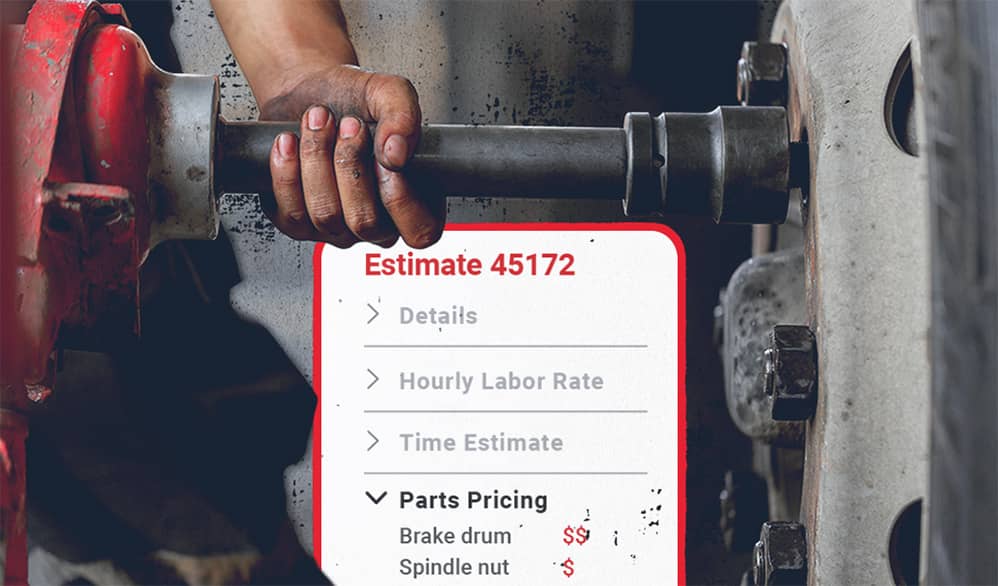
Obviously, your customers won’t be able to figure out how much a repair will cost if you don’t tell them two important details: what your hourly labor rates are, and approximately how long it’ll take your techs to finish their work. Be sure to include that info in your estimate!
Clear pricing explanations aren’t the only way to maximize transparency during the estimate creation process. At the current exchange rate (one picture = 1,000 words), photos are an efficient, powerful way to communicate what’s wrong with a customer’s truck.
Parts Pricing and Total Repair Costs
Once you’ve got your labor costs and time estimates, you’ll need to get into pricing for the parts you plan to use in your repair. It’s also a good idea to explain whether you plan to go with OEM or aftermarket parts. Either way, your price should include a markup (and our calculator can help you find the right markup for your components).
When that’s done, it’s time to estimate the total cost of your job. You don’t have to do this alone, either—tools like Mitchell 1’s ProDemand and TruckSeries labor estimator and MOTOR labor guides can help.
Terms and Conditions for Repair Services
At this point, you might think you’ve covered all the basics…but you’ll also need to cover yourself legally. To do that, your template needs to include things like authorization language, scope limitations, and payment/approval expectations. Legalese might not be the most exciting thing in the world, but trust us: you do not want to overlook this step.
Common Mistakes Shops Make When Creating Repair Estimates
While a solid template can go a long way toward minimizing errors in your repair estimates, no quote creation process is perfect. Two errors shops regularly make when preparing a commercial truck estimate are:
1. Forgetting to Include Repair Costs
When you don’t include the full extent of your repair costs in an estimate, your customers will be pleasantly surprised…and you’ll get a much less pleasant surprise in the form of lost revenue. That means including 100% of your costs in 100% of your estimates should be a high priority 103% of the time. (You heard us.)
If you have a good template for estimates, repair cost omissions shouldn’t be a serious problem for your shop. Still, your techs need to know they aren’t missing any labor and parts costs while filling out your template.
2. Using Outdated or Inconsistent Templates
Templates are useful because they give techs a standardized outline to follow while creating estimates. If these templates aren’t consistent, are out of date, or have other issues, they won’t be as helpful as they should be.
To avoid this state of affairs at your shop, be sure to look over your estimate templates every so often. In addition to these checks, give these documents some attention after you make any big changes to your internal processes.
How Fullbay Helps Shops Build Accurate, Professional Estimates
Even if your workers follow templates instead of creating estimates by hand, your quote creation process could still have room for improvement. The fact is, any type of pen-and-paper repair estimate form can suffer from human error and other problems—whether your techs have a starting point to work from or not.
Instead, your best bet is to use heavy-duty shop management software that comes with repair estimate creation tools. The best products in this category provide features like labor time guides, automatic service request generation, and real-time inventory updates. Thanks to these features and more, you, your techs, and your customers will benefit from fast, accurate quote creation.
If you want software that comes with all these tools and more, Fullbay has you covered. Getting started is easy, too: all you have to do is schedule a demo!


Get news & tips right in your inbox.