
Fleet Management: A Quick, Clear Breakdown

Have you been asking yourself, “What is fleet management?” Did you end up typing that question into Google, and it brought you here?
If so, good for you! Now that you’ve made it, let’s answer the question on your mind. Fleet management is…
…Something we’re going to define in the actual article! Sorry, it’s just that we wrote a whole section about defining fleet management, and talking about it right now would take away from that. Besides, a little suspense keeps things interesting. So let’s dive in!
Defining Fleet Management in Simple Terms
All right, let’s get into it: fleet management is the process of managing a fleet.
Crazy, huh? Okay, that’s the end of this section…
…Or not.
While that is an accurate definition of fleet management, it’s also a massively oversimplified one. Managing a fleet isn’t just one job; it’s a collection of countless smaller duties, all of which play a key role in keeping your fleet up and running. Think about everything your shop does—if it’s related to managing commercial vehicles, drivers, and operations, there’s a good chance it fits this category.
Here are a few of the many (and we mean many) tasks that fall under the umbrella of fleet management:
- Vehicle acquisition. When the time comes to expand your fleet or replace aging vehicles, you’ll need to find the top diesel truck for the job at hand.
- Vehicle maintenance. Keeping up with PMs and other service appointments is a must when it comes to running a successful fleet.
- Compliance. Your fleet also needs to comply with safety, legal, and environmental regulations.
- Fuel management. While developing your fleet management strategy, you’ll need to think about ways to keep your fuel costs down.
- Route tracking. If your fleet follows the right routes, you’ll be able to save time, money, and fuel as a result.
What Does Fleet Management Software Do?
Considering the sheer number of tasks associated with fleet management, many heavy-duty shops choose to hire a fleet manager. This person handles everything related to fleet management, from maintaining a fleet’s vehicles to ensuring these vehicles can operate as efficiently as possible.
Of course, even a highly skilled fleet manager can struggle to complete their various duties alone. Fleet management software is built to assist with these tasks, allowing fleet managers to get these jobs done with maximum efficiency.
When your fleet manager has access to fleet management software, they’ll get a helping hand while:
- Automating your shop. Fleet management systems make it possible to automate all sorts of fleet management-related tasks, including PMs, vehicle tracking, and work orders.
- Improving safety and compliance. By inspecting trucks and giving drivers training on a regular basis, fleet managers can ensure their fleet operates safely. Fleet management software helps with this while ensuring your fleet’s compliance with relevant standards and electronic logging devices.
- Enhancing your data management strategy. A fleet management program can act as a central hub for your shop’s data. Naturally, that includes the real-time insights you’ll get from telematics equipment.
What Are the Four Major Components of a Fleet Management System?
Now that you understand the basics of fleet management software, let’s take a closer look at what these programs can do. The capabilities offered by high-quality fleet management systems fall into four main categories:
1. Vehicle Tracking
Your fleet manager can only be in one place at a time. (And if they’re not, well…you’ve got bigger things to worry about than fleet management.) Because of that, it can be hard for them to know the location of your trucks when these vehicles aren’t in the shop.
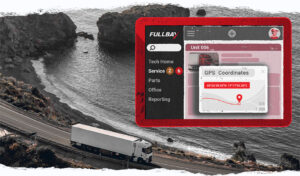
The good news is that this won’t be an issue if your fleet management system can integrate with telematics equipment. That way, your fleet manager will get up-to-the-minute updates on vehicle locations.
Once you’ve added telematics equipment to your fleet management workflow, your fleet manager will be able to get insights on driver behavior and real-time vehicle diagnostics. Among other benefits, this creates an opportunity to optimize fleet routes based on telematics data and operate with maximum efficiency. To get the most out of this technology, your fleet manager should use it alongside powerful fleet maintenance software and reports to drive data-driven decision-making.
2. Maintenance Management
Have you ever tried to track a vehicle’s preventive maintenance schedule by hand? If so, you know how difficult it can be to keep up on maintenance work—and that’s just for one vehicle. Every vehicle in a fleet has its own maintenance needs, and fleet managers need to track PMs for all of their trucks.
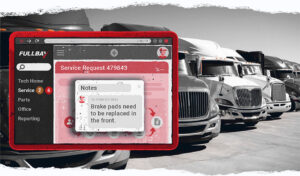
Fortunately, fleet management systems can simplify this process by automatically tracking PMs, repairs, and inspections across your fleet. That way, you’ll enjoy the financial benefits and improved reliability of regular vehicle maintenance without overworking your fleet manager.
3. Driver Management
The data provided by your telematics equipment and collected by your fleet management system won’t just let you know where your vehicles are. In addition to that, your fleet manager will get a sense of how your drivers are doing on the road.
If this data uncovers inefficient or unsafe driving habits, your fleet manager will have a perfect opportunity to let them know about the issue. They’ll also be able to address these habits in your shop’s training materials.
4. Fuel and Cost Control
We don’t need to tell you that fuel is a huge expense for the average fleet, but we will anyway. But even though there’s no getting around the cost of fuel in this line of work, there are ways you can reduce this expense with the help of a fleet management system.
While using one of these programs, your fleet manager can keep a much closer eye on your fleet’s fuel usage and take steps to improve fleet efficiency. That isn’t the only expense they’ll get insight into while using this software, either. The best fleet management systems also help fleet managers understand and lower their fleet’s maintenance costs.
Who Uses Fleet Management—and Why It Matters at Any Scale
Are you working for a heavy-duty shop managing outside fleets or an internal maintenance team handling your company’s own trucks? Either way, fleet management isn’t something you can afford to ignore. In either of these situations, top-notch fleet management software can go a long way toward making sure the fleets you’re in charge of get the attention they need to operate at maximum efficiency.
Fleet management should be a high priority for large businesses in industries relying on fleet operations. That includes fields such as:
- Construction
- Logistics
- Utilities and telecommunications
- Towing
- Municipal services
However, small fleets can also benefit from top-notch fleet management. When you embrace automation and take time to rethink your fleet management systems, your fleet manager will have an easier time working with fleets of any size.
Finding Exceptional Fleet Management Software
Fleet management software can make the process of managing fleets so much easier than it used to be. But if you’ve been paying attention, you may have noticed that we’ve been talking about “high-quality fleet management systems” and “top-notch fleet management software.” That implies not every program in this category can deliver the performance you’d expect.
At Fullbay, we do everything we can to deliver the best fleet management systems in the industry. With that in mind, our software includes all the features discussed in this article and many more (including powerful inventory management capabilities). And since our system is highly adaptable, it’s the perfect fit for fleets of any size.
So, what is fleet management? Our answer is simple: “something you won’t have to worry about while using Fullbay’s software.” Get started by scheduling your demo today!


Get news & tips Right in your inbox.
